
420-friendly meaning refers to a term used to describe individuals, spaces, or businesses that are open to cannabis or hemp-related culture. It can apply to social environments, housing, and professional settings, depending on context.
In the hemp sector, 420-friendly often reflects alignment with compliant, hemp-derived product categories such as THCa, or tetrahydrocannabinolic acid. This includes a focus on lab testing, Certificates of Analysis (COAs), and adherence to federal and state regulations.
Housing listings that allow cannabis-related activity, social profiles indicating openness, industry events, and businesses offering hemp-derived products like THCa flower, concentrates, and pre-roll formats.
The term “420 friendly” has evolved from informal slang into a widely recognized phrase used across both casual and professional environments, especially as the regulated hemp market continues to expand.
Understanding the 420-friendly meaning starts with recognizing how widely the term is used today. You’ll see it in housing listings, online profiles, business descriptions, and across the hemp industry. While it may seem straightforward at first glance, its meaning can shift depending on the setting, making it important to examine how it’s applied in real-world situations.
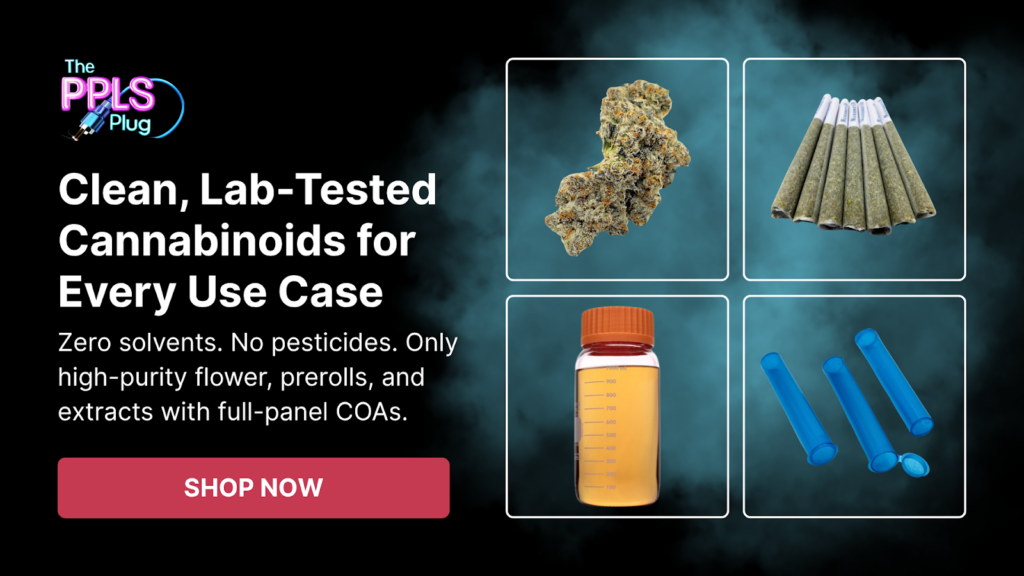
At The PPLs Plug, we operate at the intersection of culture and compliant hemp distribution. Our focus is on delivering consistent, lab-tested hemp-derived products with verified COAs, clear specifications, and reliable wholesale access. We work with a wide catalog of THCa products, maintain transparent standards, and support businesses that prioritize quality, compliance, and efficient sourcing.
In this piece, we will discuss what 420-friendly means, how its definition has evolved, and how it applies across social settings and the modern hemp industry.
The term 420 friendly meaning refers to an environment, individual, or business that is open to cannabis-related culture and products. In simple terms, if something is described as “420 friendly,” it indicates acceptance of cannabis use or association, depending on the setting.
At its core, what does 420-friendly mean comes down to acknowledgment and tolerance. This could apply to social situations, rental spaces, events, or even business operations. The phrase does not always imply participation. Instead, it signals that cannabis-related activity is permitted or not restricted within that space or context.
In today’s regulated hemp landscape, the term has also evolved to include businesses working with hemp-derived compounds such as THCa. The 2018 Farm Bill removed hemp from the federal Controlled Substances Act, significantly expanding the commercial framework for these product categories. In a B2B setting, being 420-friendly can reflect alignment with compliant sourcing practices, clear product specifications, and adherence to the legal frameworks governing hemp-derived products.
It’s important to understand that “420 friendly” can mean different things depending on where and how it is used. In personal settings, it may refer to general acceptance. In business environments, especially within the hemp industry, it often reflects a structured, compliance-focused approach that includes lab testing, Certificates of Analysis (COAs), and transparent product handling.
As regulations continue to develop in 2026, the phrase remains widely used but should always be interpreted with context in mind. Not all 420-friendly environments operate the same way, and expectations can differ based on local laws and business practices.
The 420-friendly definition centers on openness toward cannabis and hemp-related products, but the exact meaning depends on how and where the term is used. At a basic level, it indicates that a person, property, or business complies with applicable guidelines for cannabis-related activity.
In general, “420 friendly” conveys acceptance. This could apply to a rental listing, a social environment, or a professional setting. However, the definition becomes more structured in regulated industries, particularly within hemp-derived product categories.
From a business perspective, especially in the hemp supply chain, the term often reflects operational alignment rather than casual acceptance. Companies that identify as 420 friendly may be involved in sourcing, distributing, or selling hemp-derived products such as THCa flower, concentrates, or pre-roll formats. This includes maintaining clear documentation, verified lab testing, and adherence to federal and state compliance standards.
In this context, being 420-friendly is tied to transparency and product integrity. Businesses are expected to provide access to Certificates of Analysis (COAs), clearly outline cannabinoid content, and follow strict quality control processes. This ensures that products meet legal thresholds and can be distributed responsibly across approved markets.
It’s also important to recognize that the definition does not override local regulations. Even if a business or space is labeled as 420-friendly, all activities must still comply with jurisdiction-specific laws. Shipping restrictions, licensing requirements, and product classifications can vary by state, and those factors ultimately shape how the term applies in practice.
As the hemp industry continues to mature, the 420-friendly definition has shifted from a purely cultural phrase to one that also signals professionalism, compliance, and standardized operations within the marketplace.
To fully understand the 420-friendly meaning, it helps to look at where the term “420” comes from and how it became widely recognized.
The origin dates back to a group of students in California during the early 1970s known as the Waldos, who used “420” as a code for a specific after-school meeting time. Over time, the number became associated with cannabis culture and eventually expanded into a widely recognized reference point across the United States and beyond.
As awareness grew, April 20, often written as 4/20, became an informal date linked to cannabis-related events and gatherings. This helped solidify “420” as a cultural identifier, which later influenced how the phrase “420 friendly” is used today.
In modern contexts, the term has moved beyond its early origins and now appears across multiple industries, including hospitality, real estate, and hemp-derived product markets. It serves as a form of shorthand communication, allowing individuals and businesses to signal alignment or acceptance without lengthy explanations.
Within the hemp sector, this cultural relevance has been adapted into a more structured framework. Businesses operating in 420-friendly environments are often involved in regulated product categories, such as THCa flower, concentrates, and pre-rolls. These operations are typically supported by lab testing, COA documentation, and compliance with federal and state guidelines.
While the roots of “420” are informal, its current usage carries more defined expectations, especially in professional settings. Today, it represents both a cultural reference and a practical label that helps communicate compatibility, policies, and business alignment.
The 420-friendly slang meaning plays a key role in how the term is understood across different environments today. While it started as informal language, its usage now spans both casual and professional settings, each with slightly different expectations:
In everyday conversations, “420 friendly” is often used to signal general acceptance in social environments. This could include friend groups, gatherings, or shared spaces where cannabis-related activity is not restricted. The phrase helps set expectations without requiring detailed discussion.
The term frequently appears in online bios, listings, and community platforms. Here, it acts as a quick identifier that communicates compatibility between users. Whether in housing, networking, or community groups, “420 friendly” simplifies communication and avoids misunderstandings.
Event organizers and hospitality providers may use “420 friendly” to indicate policies within their spaces. This helps attendees understand what is permitted in advance. However, these environments still operate under local regulations, and guidelines can vary by location.
In professional settings, particularly within the hemp industry, the slang meaning becomes more structured. Businesses may use the term to reflect alignment with hemp-derived product categories such as THCa, supported by lab testing, COAs, and compliance standards. In this context, it represents operational compatibility rather than casual expression.
The term “420 friendly” appears across a wide range of environments, each with its own expectations and level of formality. Understanding where it shows up most often helps clarify how the phrase is applied in real-world situations:
One of the most common places you’ll see “420 friendly” is in housing listings. Landlords or roommates may use the term to indicate that cannabis-related activity is allowed within the property. This helps set clear expectations before agreements are made, although local laws and property rules still apply.
Online communities and social platforms frequently use “420 friendly” as a compatibility marker. Whether in group descriptions or personal profiles, it allows users to quickly identify shared preferences and avoid potential conflicts in social interactions.
Event organizers may label gatherings as 420-friendly to communicate what is permitted within the space. This can include private events or industry-related meetups. Even in these cases, guidelines are typically shaped by local regulations and venue policies.
In the hemp industry, the phrase takes on a more structured role. Businesses may use “420 friendly” to reflect alignment with hemp-derived product categories and compliant operations. This includes sourcing THCA wholesale, offering a range of THCA hemp flower, managing the supply of THCA concentrate in bulk, and distributing THCA pre-rolls within regulated frameworks.
In these settings, the term is tied to transparency, lab-tested products, and accessible Certificates of Analysis. It also reflects a commitment to operating in accordance with federal guidelines and to respecting state-specific shipping restrictions where applicable.
The phrase is widely used, but 420-friendly means something slightly different depending on the setting. Context plays a major role in how the term should be interpreted, especially as it moves between casual use and regulated industries:
In everyday situations, “420 friendly” usually signals general acceptance. It may indicate that someone is comfortable being around cannabis-related activity in social spaces, shared living environments, or private gatherings. The meaning here is informal and based on personal preference rather than structured rules.
In a business setting, particularly within the hemp industry, the meaning becomes more defined. Being 420-friendly can reflect involvement in hemp-derived product categories like THCa, along with a focus on compliance, product specifications, and transparent operations. This includes verified lab testing, accessible COAs, and clearly labeled cannabinoid content.
The interpretation of “420 friendly” is also shaped by local and state regulations. What is acceptable in one region may not apply in another, and recent federal legislative changes have further affected how hemp-derived products are classified and distributed across state lines. Businesses and individuals must operate within jurisdiction-specific guidelines, including shipping restrictions, licensing requirements, and product classifications.
As the hemp market continues to develop, the phrase has taken on a more structured role in professional environments. It now signals not only cultural alignment but also operational standards, including quality control, documentation, and adherence to federal compliance frameworks.
Understanding the 420-friendly meaning requires looking at both its cultural roots and how it is used today. What started as an informal phrase has grown into a widely recognized term across social settings, digital platforms, and business environments. In everyday use, it often signals general acceptance, but its meaning can shift depending on where it appears and who uses it.
In professional settings, especially within the hemp industry, the term carries more defined expectations. It can reflect alignment with compliant practices, such as lab testing and verified Certificates of Analysis (COAs), as well as adherence to federal and state regulations. As the industry continues to develop, the importance of context remains central to understanding how “420 friendly” is applied.
“420” is a numerical reference that became associated with cannabis culture over time. It is now widely used as a recognizable code in both casual and industry-related conversations.
No, the term does not automatically mean a person or business is selling cannabis or hemp products. It indicates openness or alignment, ranging from casual acceptance to professional involvement.
Yes, some businesses may support or collaborate within the hemp industry without directly selling products. This can include logistics, marketing, or distribution partnerships.
No, legality depends on local and state regulations. Even if a space or business is labeled 420-friendly, all activities must still comply with applicable laws.
In professional settings, the term is used more carefully and often implies alignment with compliant hemp operations, including proper sourcing, documentation, and product transparency.
While it originated in the United States, the term is recognized worldwide. However, its acceptance and usage can vary depending on regional laws and cultural awareness.